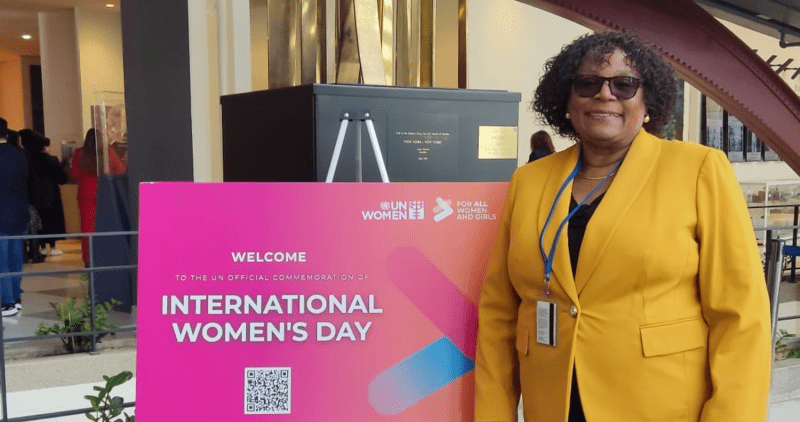
At the 70th session of the Commission on the Status of Women (CSW70), Ms Xiomara Núñez, speaking on behalf of the International Cooperative Alliance (ICA) Gender Equality Committee, called on Member States to take stronger action to remove the structural barriers preventing women and girls from fully exercising their rights.
Addressing the session’s priority theme, “Ensuring and strengthening access to justice for all women and girls,” Núñez stressed that access to justice must be understood in a broader sense than courts and formal legal systems alone. She said it also includes women’s ability to claim their economic, social and collective rights in everyday life.
Speaking on behalf of a movement representing more than 3 million cooperatives and one billion members worldwide, Núñez highlighted the persistent barriers women continue to face, including discriminatory laws, unequal access to land and productive resources, limited financial inclusion, and underrepresentation in decision-making spaces. According to the statement, these obstacles continue to restrict women’s equal participation in economic life across sectors and regions.
Núñez pointed to cooperatives as practical and people-centred vehicles for change. She said cooperatives help women overcome structural inequality by pooling resources, strengthening collective voice, and embedding equality within democratic governance structures. In doing so, they contribute not only to women’s economic empowerment, but also to building more inclusive local justice ecosystems.
The statement also drew attention to the International Year of the Woman Farmer in 2026, describing it as an important opportunity to push for structural change. Núñez underlined the central role of women farmers in food security and sustainable development, while noting that many still face systemic discrimination in access to land, credit, markets and legal protection. She said agricultural cooperatives can play a transformative role in advancing these women’s rights and improving their access to justice.
The ICA Gender Equality Committee urged Member States to act in three key areas: reform discriminatory laws and practices that limit women’s equal participation in economic life, formally integrate cooperatives into national gender equality and access-to-justice frameworks, and ensure that justice and development policies respond to the realities faced by rural and grassroots women, including women farmers.
Closing the statement, Núñez reaffirmed the cooperative movement’s readiness to work with governments and United Nations partners to promote gender equality rooted in justice, participation and collective empowerment.